
Introduction:
When it comes to customizing your car, vinyl wraps have become a popular and cost-effective solution. However, not all vinyl wraps are created equal. Two primary types dominate the market: cast vinyl and calendered vinyl. Understanding the differences between these two options can help you make the best decision for your vehicle. In this article, we’ll break down the key aspects of both types of vinyl wraps, including durability, ease of installation, cost, and performance. So, which is the better choice for your car? Let’s dive in!
Key Takeaways:
- Cast vinyl wrap offers superior durability and flexibility, ideal for complex curves and long-lasting performance.
- Calendered vinyl wrap is more affordable and easier to install, but it’s less durable over time.
- The best choice depends on your car’s needs, your budget, and whether you’re going for a professional or DIY installation.
- Cast vinyl is preferred for high-end finishes, while calendered vinyl suits simple applications and short-term projects.
Understanding Vinyl Wraps: An Overview
Before we compare cast and calendered vinyl wraps, it’s important to know what a vinyl wrap is and how it works. A vinyl wrap is a large sheet of vinyl that adheres to the surface of your car, giving it a fresh new look. It’s often used for color changes, advertising, or protecting the paint underneath.
What is Cast Vinyl Wrap?
Cast vinyl is made by pouring liquid vinyl into a mold, which is then heated and stretched. This manufacturing process allows the vinyl to maintain its flexibility and durability, even when applied to curved surfaces.
- Advantages of Cast Vinyl:
- Durability: Cast vinyl is highly resistant to fading, cracking, and peeling. It can last 7-10 years depending on conditions.
- Flexibility: Ideal for complex shapes and curves, making it suitable for full-car wraps or intricate designs.
- Smooth finish: Offers a professional-grade look with minimal texture or imperfections.
- UV and weather resistance: Cast vinyl withstands extreme weather conditions, keeping its vibrant color intact.
What is Calendered Vinyl Wrap?
Calendered vinyl is made by heating vinyl sheets and rolling them through a series of rollers to stretch and smooth it out. This process makes the vinyl thicker and less flexible than cast vinyl.
- Advantages of Calendered Vinyl:
- Affordability: Typically, calendered vinyl is more affordable than cast vinyl, making it a great option for budget-conscious buyers.
- Ease of installation: Due to its thickness, calendered vinyl is easier to handle, making it a good choice for DIYers.
- Short-term use: Perfect for short-term applications such as temporary advertising or seasonal designs.
Cast Vinyl vs. Calendered Vinyl: Which One is Better for Your Car?
Durability and Lifespan
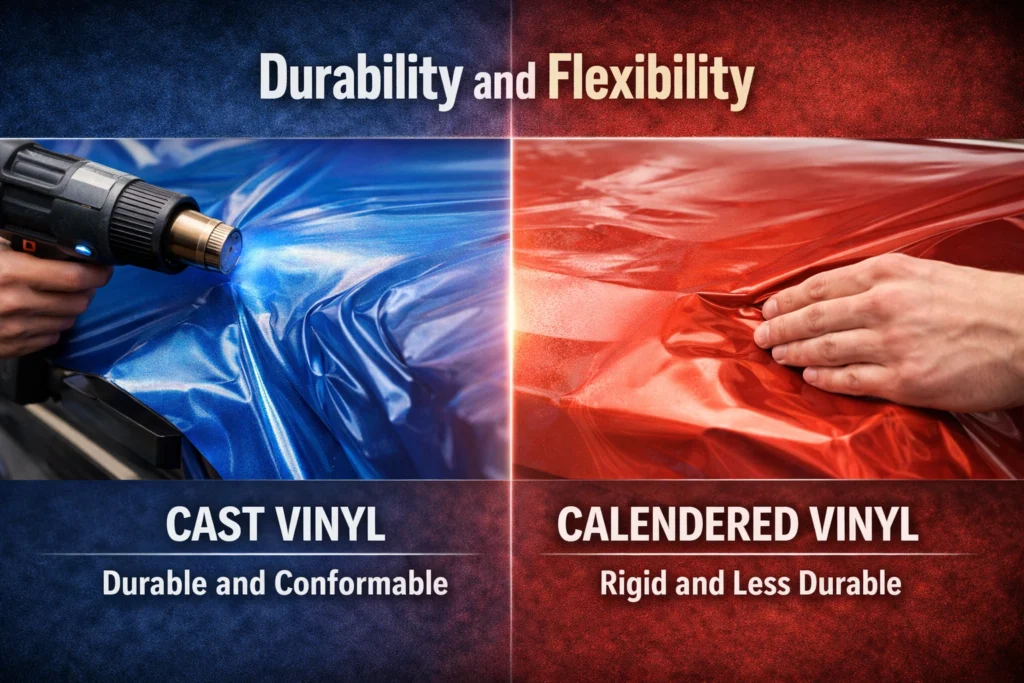
When it comes to the longevity of your vinyl wrap, cast vinyl is the clear winner. Cast vinyl is built to last, offering better UV resistance, weather protection, and scratch resistance. For cars exposed to harsh weather conditions or high UV rays, cast vinyl is your go-to choice.
On the other hand, calendered vinyl doesn’t perform as well over time. It’s more prone to fading, cracking, and peeling, especially when exposed to the elements for long periods. This makes calendered vinyl a better choice for short-term applications.
Verdict: For long-term durability, go with cast vinyl. If you’re working on a temporary wrap, calendered vinyl can get the job done without breaking the bank.
Flexibility and Application
One of the main differences between cast and calendered vinyl is flexibility. Cast vinyl is much more flexible, allowing it to conform to complex curves, sharp angles, and deep recesses. This makes it the ideal choice for a full vehicle wrap or intricate designs.
Calendered vinyl, being thicker and less flexible, is best suited for flat or slightly curved surfaces. While it’s easier to install due to its thickness, it can struggle to wrap around complex shapes without bubbling or wrinkling.
Verdict: If you have a high-performance vehicle or want to wrap your car in complex patterns, cast vinyl is the best option. For simpler projects or DIY installations, calendered vinyl works just fine.
Cost Comparison
Price is often a deciding factor when choosing between cast and calendered vinyl. Cast vinyl is more expensive due to its advanced manufacturing process, but its durability and performance justify the higher price tag. It’s a great investment for those looking for a long-lasting, high-quality finish.
Calendered vinyl, on the other hand, is more affordable, making it an attractive option for budget-conscious car owners or those looking to apply vinyl wraps temporarily. However, keep in mind that the cheaper price may come at the cost of longevity and appearance.
Verdict: If budget is your primary concern, calendered vinyl offers excellent value. For a high-end, long-lasting result, invest in cast vinyl.
Installation: DIY or Professional?
Installing vinyl wraps can be a challenging task, especially for beginners. Cast vinyl’s flexibility and durability often require professional installation to avoid mistakes during application. The cost of professional installation may add to the overall price of your cast vinyl wrap.
Calendered vinyl is easier to work with and is often chosen for DIY projects. Due to its thickness, it’s more forgiving and easier to manipulate, making it a suitable option for first-time installers.
Verdict: For DIY projects, calendered vinyl is more manageable. For professional-grade results, cast vinyl is the better choice.
Tips for Maintaining Your Vinyl Wrap
To ensure your vinyl wrap lasts as long as possible, proper maintenance is key. Here are a few tips:
- Regular Cleaning: Use a mild soap and water solution to clean your wrap. Avoid harsh chemicals that could damage the vinyl.
- Avoid Direct Sunlight: While cast vinyl offers better UV resistance, both types can fade over time with constant sun exposure.
- Don’t Use Abrasive Materials: When cleaning or drying your car, avoid abrasive towels that can scratch the surface.
- Apply a Protective Coating: Consider applying a protective layer, like a ceramic coating, to shield the wrap from dirt and environmental elements.
For more details on the longevity and care of vinyl wraps, check out our vinyl wrap lifespan guide.
Vinyl Wrap FAQs
Cast vinyl is more durable and flexible, ideal for complex surfaces, while calendered vinyl is thicker, more affordable, and easier to install for flat surfaces.
Although it’s possible, cast vinyl is best installed by a professional due to its flexibility and the precision required.
Cast vinyl wraps can last 7-10 years, while calendered vinyl typically lasts 3-5 years, depending on conditions.
Yes, calendered vinyl is generally less expensive than cast vinyl, making it a more budget-friendly option.
Yes, both cast and calendered vinyl can be used for vehicle advertising, but for long-term use, cast vinyl is recommended.
Vinyl wraps can be removed with heat and gentle peeling. For best results, seek professional help to avoid damaging the car’s paint.
The best vinyl for a car wrap depends on your needs. Cast vinyl is best for durability and complex designs, while calendered vinyl is suitable for simple, short-term wraps.
The cost of a full vinyl wrap can range from $2,000 to $5,000 depending on the vinyl type, vehicle size, and whether the installation is professional.
DIY car wrapping can be a cost-effective solution, but it requires patience and skill. For the best results, consider professional installation, especially with cast vinyl.
Final Thoughts
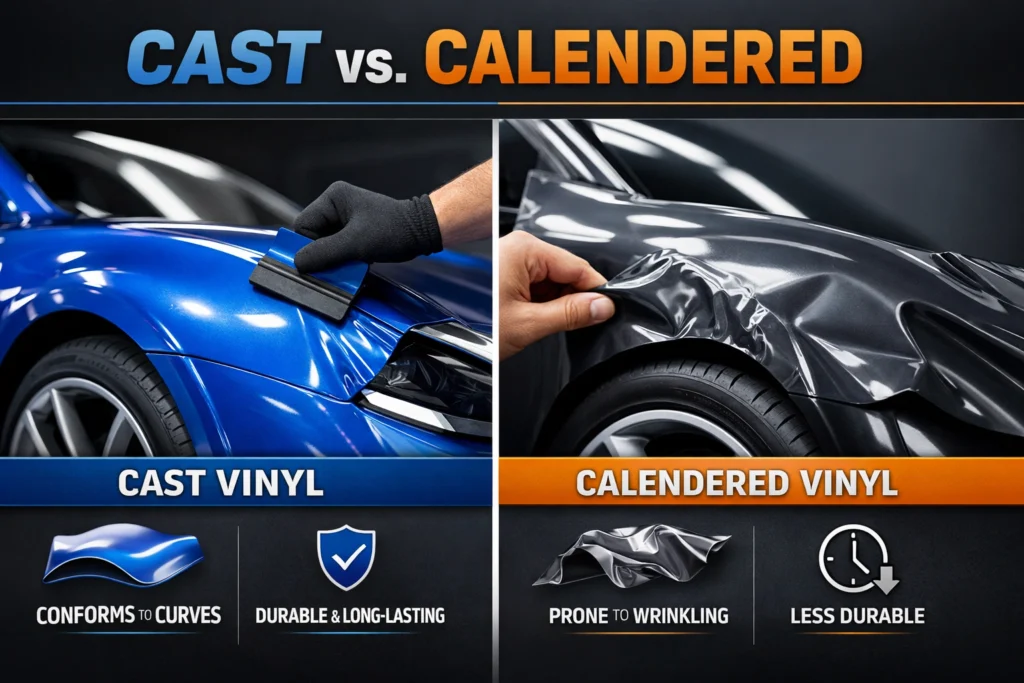
Choosing between cast and calendered vinyl depends on your priorities. If you want a long-lasting, high-performance wrap, cast vinyl is the way to go. For a budget-friendly, short-term solution, calendered vinyl can still offer great results.
Need more help deciding? Whether you’re a DIYer or prefer professional installation, Vinyl Wrap Pro has the tools and expertise you need. Check out our vinyl wrap types and DIY vs professional wrap guides for more insights.