
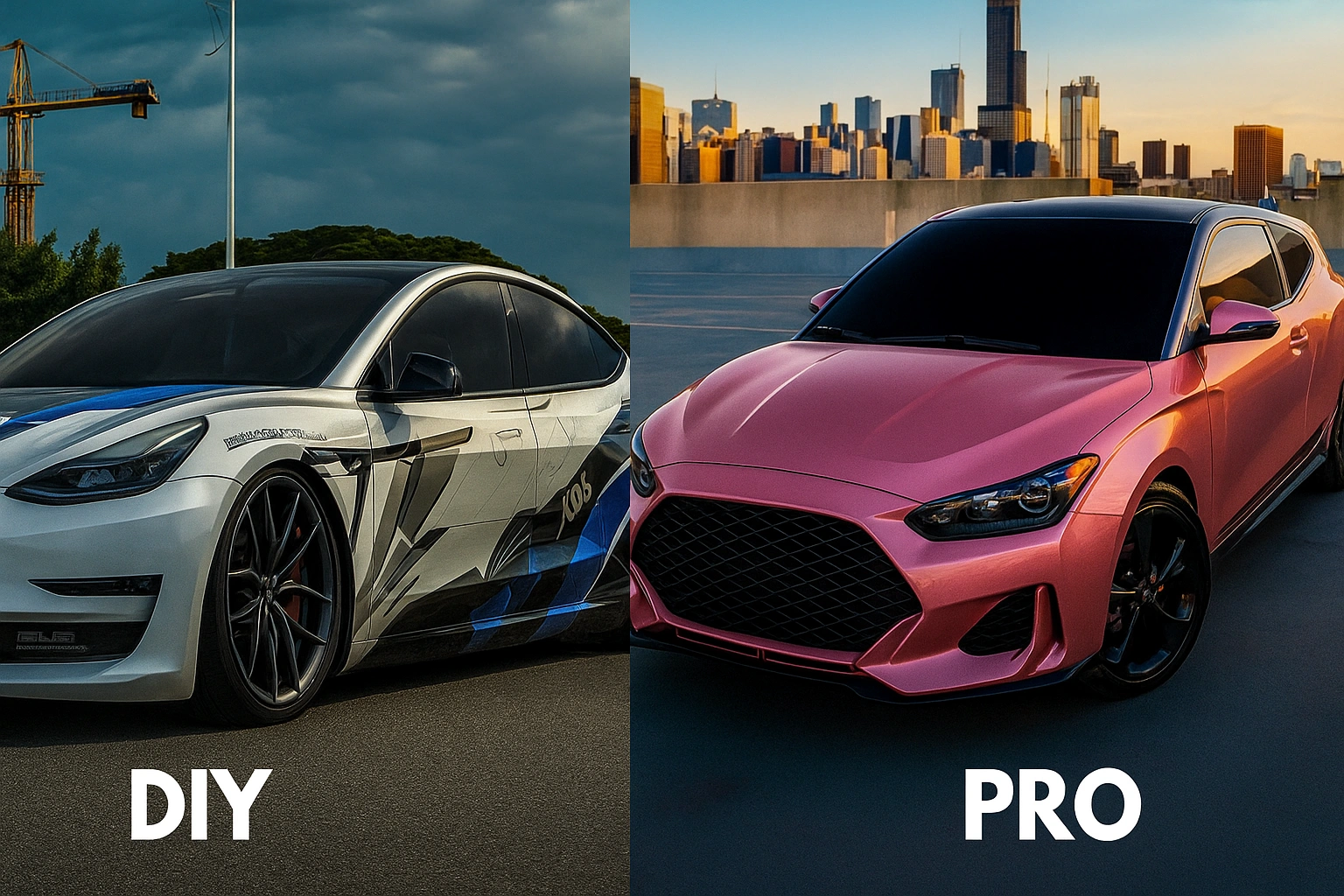
Introduction
When it comes to car wrap installation, many USA vehicle owners wonder whether to tackle it themselves or hire a professional. A vinyl wrap can completely transform your car’s appearance, but the outcome often depends on who installs it. In this guide, we’ll break down DIY vs professional car wrap installation, answer common questions, and help you decide what’s best for your budget, time, and vehicle.
Across the country, drivers search daily for answers about the cost to wrap a vehicle, how much it is to wrap a car, or whether car wrapping at home is worth the effort. The rise of DIY vinyl wrap kits makes it easier than ever to attempt a wrap yourself, but professional installation still dominates for long-term durability and a flawless finish. This USA-focused guide compares both options, explains costs for trucks, cars, motorcycles, and even motorhomes, and outlines what to expect based on your budget and skill level. Vinyl Wrap Pro also offers expert insights to help you choose the best installation method for your needs.
Key Takeaways
- DIY wraps save money but require time, tools, and precision.
- Professional wraps deliver smoother results and longer durability.
- Mistakes during DIY installation can lead to costly repairs.
- Proper care and finish selection extend the life of any wrap.
- The cost to wrap a car in the USA typically ranges from $2,000-$5,000 professionally or $500-$1,200 for DIY materials.
- Trucks, SUVs, motorcycles, and motorhomes have different price ranges depending on size.
- DIY is best for small parts (hood, roof, mirrors), not full vehicles.
- Professional shops like Vinyl Wrap Pro offer warranties and high-grade materials.
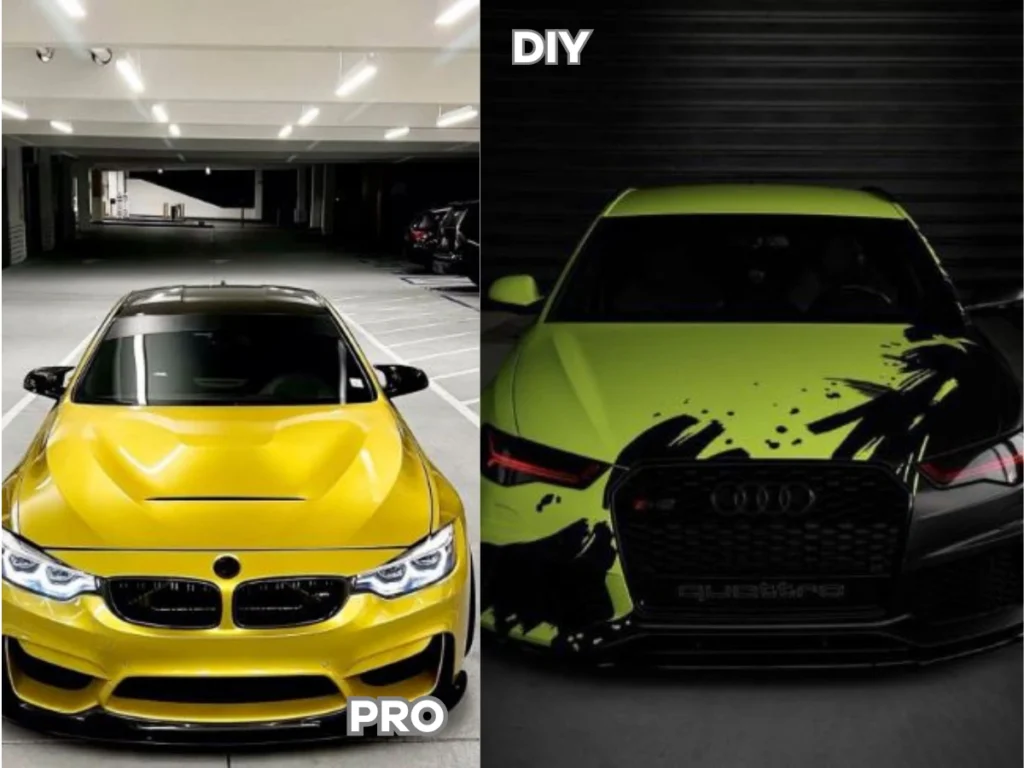
DIY Car Wrapping Overview
DIY car wrapping appeals to USA owners looking for the cheapest way to wrap a car or testing whether they can do car wrap at home. A typical DIY kit includes vinyl, a heat gun, squeegee, cutting tools, and primer. While the material cost is lower, labor time increases significantly, especially for large cars or intricate bumpers.
Cost of DIY Wraps
- Small car: $250-$700 for materials
- Sedan: $400-$900
- Truck: $600-$1,200 (varies by size; see truck section below)
- Motorcycle: $100-$350
- Motorhome: $800-$2,500 in vinyl alone
DIY may be affordable, but mistakes might increase costs. Uneven cuts, overstretching, and tearing often require re-ordering vinyl.
Is DIY Hard?
Yes, wrapping a car yourself is challenging, especially if you’ve never done it. Curved panels, door handles, bumpers, and roof channels are difficult without experience. Even skilled detailers practice on smaller pieces before attempting a full car.
Professional Car Wrap Installation
Professional installers deliver better long-term results, especially when using premium films from 3M, Avery Dennison, Orafol, or other USA-trusted brands. Shops use advanced techniques such as steam stretching, inlay cuts, post-heating, and surface decontamination to ensure a flawless finish.
Professional Costs by Vehicle Type
Average USA price ranges:
| Vehicle Type | Price Range |
| Small Car | $2,000-$3,000 |
| Sedan | $2,500-$3,500 |
| Pickup Truck | $3,000-$5,500 |
| SUV | $3,500-$6,000 |
| Motorcycle | $500-$1,500 |
| Motorhome | $4,000-$10,000+ |
| Hood-Only Wrap | $200-$500 |
| Roof-Only Wrap | $250-$600 |
Professional shops offer warranties, which reduce long-term costs. Vinyl Wrap Pro recommends pro installation for color changes or commercial vehicles.
Cost Comparisons: Cars, Trucks, Motorcycles, and More
How Much Does It Cost to Wrap a Car?
Across the USA, most drivers pay:
- $2,000-$5,000 for a full professional wrap
- $500-$1,200 for DIY material kits
Influencing factors:
- Type of vinyl (matte, gloss, satin, chrome)
- Vehicle size and curvature
- Condition of paint
- Whether old wrap removal is required
How Much Does It Cost to Wrap a Truck?
Truck wrapping varies greatly because trucks have larger surfaces and deeper contours.
Average USA truck wrapping costs:
- Midsize truck: $3,000-$4,000
- Full-size truck / F-150: $3,500-$5,500
- Commercial fleet truck: $2,000-$4,000
- Matte black truck wrap: +$300-$700 extra (material cost)
DIY material cost for trucks: $600-$1,200.
How Much Does It Cost to Wrap a Motorcycle?
Motorcycles require less vinyl but more precision due to complex curves. USA prices typically range:
- DIY materials: $100-$300
- Professional installation: $500-$1,500
How Much Does It Cost to Wrap the Hood or Roof of a Car?
- Hood wrap: $200-$500
- Roof wrap: $250-$600
DIY: $50-$150 depending on film type.
How Much Does It Cost to Wrap a Motorhome?
Motorhome wraps require more labor and larger sheets:
- DIY materials: $800-$2,500
- Professional installation: $4,000-$10,000+
DIY vs Professional: Durability, Appearance, and Maintenance
Durability Comparison
DIY wrap longevity: 1-3 years
Professional wrap longevity: 5-7 years
USA climate conditions (sun exposure, humidity, snow, road salt) significantly affect durability.
Appearance Comparison
Professionally installed wraps almost always look smoother because shops use:
- Post-heating for edges
- Inlays for deep channels
- Vinyl stretch monitoring
- Paint decontamination tools
DIY wraps may show bubbles, wrinkles, or seams if not applied carefully.
Maintenance Tips (Universal for Both DIY & Pro Installs)
- Wash using pH-neutral soap
- Avoid automatic car washes
- Store in shaded areas if possible
- Use ceramic sealants made for vinyl
Vinyl Wrap FAQs
Most USA drivers spend $2,500-$4,000 for a professional full wrap. DIY projects cost $500-$1,200, depending on vinyl type and vehicle size.
A Dodge Charger typically costs $3,000-$4,500 for a professional wrap because of its curves and large panels. DIY materials run $550-$900.
Hyundai Elantra wraps average $2,200-$3,200 professionally or $450-$700 for DIY materials.
The cheapest method is a DIY install using mid-grade vinyl, costing $350-$900 per car. However, imperfections are common, and durability decreases.
Yes. You need a heat gun, squeegee, cutting blade, surface cleaner, isopropyl alcohol, and microfiber towels. These tools ensure proper adhesion and bubble removal.
Sticker wrapping uses thinner films for small decals or graphics. Vinyl wrapping uses thicker, conformable films meant for full-body coverage and long-term use.
Wrapping is often cheaper, faster, and reversible compared to painting. USA drivers choose vinyl to change colors without long-term commitment. It also protects factory paint, maintains resale value, and allows unique finishes like matte or chrome unavailable in traditional paint.
DIY wraps may take 15-40 hours depending on experience. Professionals finish in 1-3 days using advanced tools and climate-controlled bays. Preparation, cleaning, and post-heating affect the overall timeline. check How Long Does It Take to Wrap a Car?
Quality vinyl installed correctly does not damage OEM paint. In fact, it protects against scratches and UV exposure. Damage occurs only when applied over poor paint, improperly removed, or exposed to excessive heat for long periods.
Final Thoughts
Both DIY and professional car wrap installation have pros and cons. DIY offers lower costs and flexibility, while professional installation ensures durability, higher quality, and fewer risks. USA owners should consider vehicle type, budget, available time, and expectations before choosing an option.
If you want showroom-quality results, Vinyl Wrap Pro recommends professional installation for any full vehicle wrap. Ready to learn more? Check out:
- car wrap installation
- How to Remove Vinyl Wrap Safely (Cars & Trucks)
- Gloss vs Matte vs Satin vs Chrome: Which Finish Should You Choose?