

Introduction
If you’ve noticed your vinyl wrap lifting or peeling, you’re not alone. Many USA car owners face this issue after months of daily driving, temperature changes, and road exposure. Edge lifting is one of the most common wrap problems, especially around doors, mirrors, bumpers, and window trim.
The good news is that learning how to fix peeling edges on a wrap is often straightforward when addressed early. Small lifts can be repaired at home using heat and proper sealing methods. Larger failures may require professional repair to avoid full replacement. Knowing when and how to act can save money, preserve your vehicle’s appearance, and extend the life of your vinyl wrap.
Key Takeaways
- Peeling edges on a vinyl wrap usually result from installation issues, climate stress, or improper maintenance
- Small vinyl wrap edge lifts can often be repaired with heat and sealing techniques
- Learning how to seal vinyl wrap edges early prevents moisture and dirt damage
- Areas like window trim and body panel edges are most prone to peeling
- High-quality materials and expert installers reduce long-term wrap failure
- Vinyl Wrap Pro provides professional wrap repair and edge sealing across the USA
Why Do Vinyl Wrap Edges Peel?
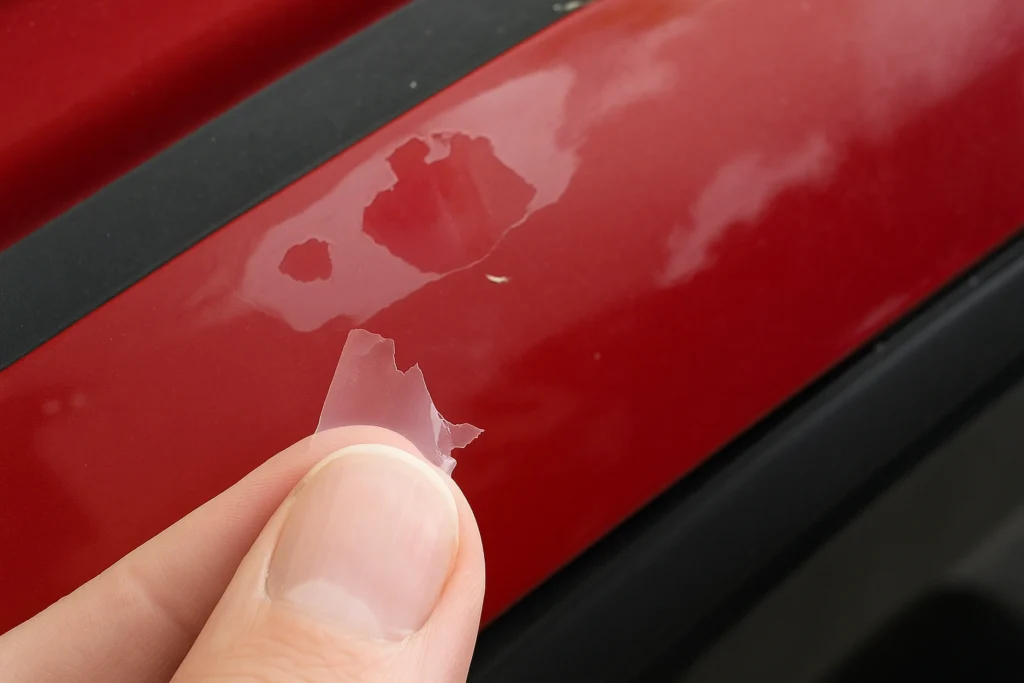
Vinyl wrap edges peel when adhesion weakens over time. This often happens where the vinyl stretches or wraps around sharp contours. Common causes include poor surface preparation, insufficient post-heating, or overstretching the material during installation.
Environmental factors play a major role in the USA. Hot summers, cold winters, and high UV exposure can cause vinyl to expand and contract. Over time, this movement stresses edges, especially on horizontal surfaces and window trim.
Lower-quality films also struggle to hold edges. Premium brands perform better, but even the best vinyl requires correct installation techniques to avoid peeling.
How to Fix Peeling Edges on a Car Wrap (DIY Method)
If the peeling area is small and clean, a DIY repair may work.
Steps to fix peeling vinyl wrap edges:
- Clean the area with isopropyl alcohol to remove dirt and oils
- Gently warm the vinyl using a heat gun or hair dryer
- Press the vinyl back into place using firm, even pressure
- Apply an edge sealer or adhesive promoter to reinforce adhesion
- Allow the area to cool completely before driving
This method works best when the vinyl has not been contaminated with moisture or debris. If the wrap continues lifting after repair, professional attention is recommended.
How to Seal Vinyl Wrap Edges for Long-Term Durability
Knowing how to seal vinyl wrap edges is key to preventing repeat peeling. Edge sealers are designed to protect high-stress areas like door edges, wheel arches, and window trim.
Professional installers often use:
- Edge sealing tape
- Liquid edge sealers
- Adhesive promoters for complex curves
Sealing is especially important in states with high heat, humidity, or snow exposure. Vehicles exposed to frequent washing or highway driving benefit the most from sealed edges.
Can You Fix a Peeling Vinyl Wrap Once Dirt Gets Underneath?
Once dirt or moisture enters beneath the vinyl, adhesion weakens significantly. Re-sticking the wrap becomes difficult because contaminants prevent proper bonding.
In these cases, installers may need to:
- Trim and re-wrap the affected section
- Replace individual panels
- Remove and reinstall vinyl near trim or edges
If you are unsure whether a section can be saved, review can you reuse a vinyl wrap? to understand material limitations.
Peeling Vinyl Wrap Around Window Trim and Body Edges
Many drivers search for how to fix peeling car window trim because these areas experience constant stress. Window trim, mirrors, door handles, and bumpers are common failure points.
Fixing peeling wrap on trim requires precise heating, controlled tension, and sealing. DIY attempts often worsen the problem if vinyl is overstretched. Professional repair ensures the wrap is reset correctly without visible seams.
Can You Wrap a Car with Peeling Paint?
Wrapping over peeling paint is not recommended. Vinyl adheres to stable surfaces only. If paint is flaking, the wrap will peel alongside it.
Before wrapping:
- Remove loose paint
- Sand affected areas smooth
- Apply primer if needed
Skipping prep leads to premature wrap failure and wasted material.
DIY vs Professional Wrap Repair
DIY repairs are suitable for small edge lifts on clean surfaces. However, repeated peeling often indicates deeper installation issues.
Professional wrap repair offers:
- Certified materials and edge sealers
- Proper post-heating techniques
- Longer-lasting results
For guidance, review diy vs professional car wrap installation to compare cost, durability, and risk.
How to Prevent Vinyl Wrap Edges from Peeling
Preventive care reduces future issues significantly.
Best practices include:
- Avoid pressure washing near edges
- Hand wash with mild soap
- Park in shaded areas when possible
- Schedule periodic inspections
- Choose experienced installers
Selecting a reputable provider like Vinyl Wrap Pro ensures proper surface prep, edge sealing, and long-term durability.
Vinyl Wrap FAQs
To fix peeling edges on a vinyl wrap, clean the area, apply heat, press the vinyl back into place, and seal the edge. Small repairs work well with DIY methods, while larger areas need professional repair.
Vinyl wrap edges peel due to poor installation, insufficient post-heating, overstretching, or environmental exposure. Heat, moisture, and UV rays weaken adhesion over time.
You can re-stick a vinyl wrap if the area is clean and small. Once dirt or moisture enters, re-adhesion becomes unreliable and replacement may be required.
A properly installed vinyl wrap should last five to seven years without peeling. Poor installation or harsh conditions can shorten lifespan significantly.
Edge sealing is highly recommended for high-stress areas. It prevents moisture intrusion and significantly reduces edge lifting.
Yes, peeling wrap on window trim can be repaired, but it requires precise heating and sealing. Professional repair provides the cleanest results.
Automatic and pressure washes can damage wrap edges. Hand washing is the safest option for long-term durability.
Final Thoughts
Peeling edges on a wrap are common but manageable when handled early. Understanding how to fix peeling edges on a wrap helps you protect your investment, avoid full replacements, and maintain a clean appearance.
DIY repairs work for minor issues, but professional repair offers longer-lasting results. If your wrap shows repeated peeling, it may be time for expert help.
For reliable wrap repair, edge sealing, and professional installation across the USA, trust Vinyl Wrap Pro to keep your vehicle looking its best.
Explore more:
Diy vs professional car wrap installation
Gloss vs Matte vs Satin vs Chrome: Which Finish Should You Choose?