

Introduction
Vinyl wraps enhance the look of your vehicle but are prone to wear and tear. When damage occurs, car owners are often left wondering if they should repair the damage or replace the entire wrap. It’s important to know that not all damage requires a full replacement.
The question should not be whether the wrap is damaged, but whether it can be repaired or needs a complete replacement. The answer depends on several factors, including the type, location, and severity of the damage.
In this blog, we’ll help you understand the difference between vinyl wrap repair vs replacement, when to save a panel, and when a replacement is the best option.
Key Takeaways
- Minor issues like edge lift, small bubbles, and light scuffs can often be repaired.
- Deep cuts, cracks, fading, and adhesive failure require a full panel replacement.
- High-traffic areas like hoods, roofs, bumpers, and mirrors often wear out faster.
- Matte, satin, and chrome wraps are harder to repair than gloss finishes.
- A patch may save money but might not be invisible, especially on large panels.
- Always assess the adhesive condition before attempting a repair.
- When paint is damaged underneath, the vinyl wrap needs to be removed and inspected.
Vinyl Wrap Repair vs Replacement:
When it comes to vinyl wrap damage, the decision is simple:
- Repair when the problem is small, local, and fresh.
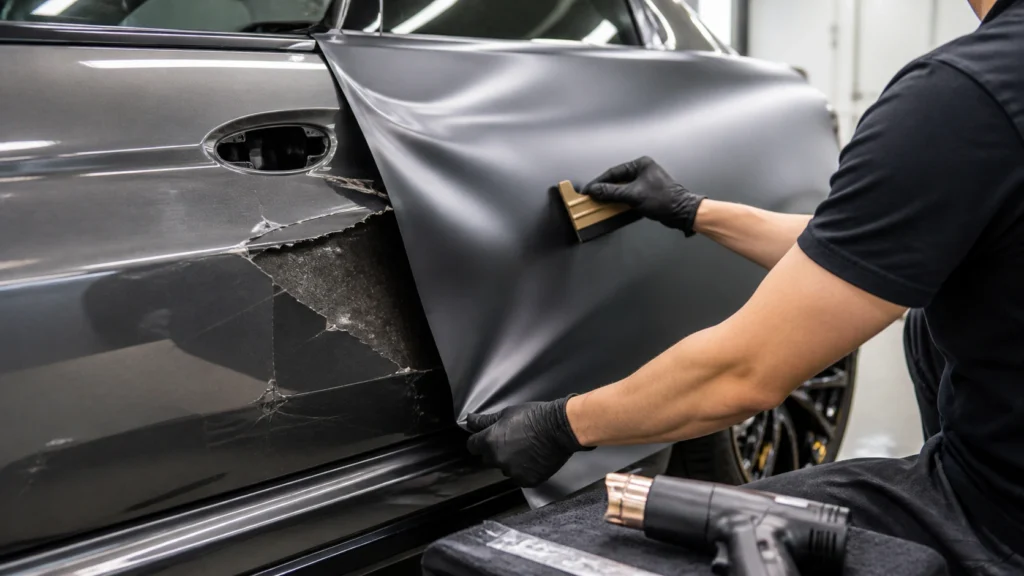
- Replace the panel when the damage affects the vinyl’s structure, the adhesive bond, or when the visual match is compromised.
Many car owners mistake a temporary fix for a true repair. While a shop can press down a lifting edge and make it look fine for a short period, this is often hiding the real issue. To avoid wasting money, make the right choice by assessing the depth and age of the damage.
When Vinyl Wrap Repair Makes Sense
1. Small Edge Lifts
Small edge lifts around doors, bumpers, mirrors, and wheel arches are one of the most common issues. Fortunately, these can usually be repaired. The repair involves cleaning the lifted area, applying heat, pressing the vinyl back down, and sealing the edge.
However, this repair is only effective if the adhesive is clean and the damage is not too extensive. Dirt, wax, or moisture trapped under the film can weaken the bond, and simply pressing the edge back down will not prevent further lifting. For detailed instructions on handling this issue, check out our guide on how to fix peeling edges.
Case Study 1: Door Edge Lift After Car Wash
A customer noticed a small lift along the edge of their driver-side door after using a brush car wash. Since the vinyl was still relatively new, and the adhesive was in good condition, the issue could be resolved by cleaning the area, applying heat, and pressing the vinyl back down. The repair lasted, and the panel was saved.
2. Small Air Bubbles
Small bubbles that appear after installation are a common issue, often caused by trapped air or moisture. These can often be repaired by a professional installer using heat and pressure to release the trapped air and smooth the surface.
However, larger bubbles or those located near curves or seams may be more challenging to fix and could indicate improper installation or adhesive failure. In such cases, the panel may need replacement.
Case Study 2: Bubbles on a Flat Hood
A flat, gloss black hood wrap had a few small air bubbles. The installer used a heat gun and squeegee to release the air, and the wrap was restored to its original state without needing to replace the entire panel.
3. Light Surface Scuffs
Light scuffs or scratches on gloss vinyl can usually be cleaned or buffed out. Matte and satin finishes, however, are more sensitive to scuffing and may show marks more easily. If the scuff is minor and only on the surface, it can be repaired with cleaning products or mild heat.
If the scuff is deep, however, it may require a full panel replacement to restore the appearance.
4. Fresh Stains
Bug splatter, bird droppings, tree sap, and road grime can stain vinyl wraps. Quick action is key to saving the panel. Vinyl wrap-safe cleaners can often remove fresh stains before they set in. However, if a stain has been left for too long and has baked into the film, a patch or panel replacement might be necessary.
When Vinyl Wrap Replacement Is the Best Option
1. Deep Cuts and Scratches
A deep cut or scratch that penetrates the vinyl film cannot be repaired. While small, hidden cuts can be patched, a visible cut on a high-traffic area like the hood, roof, or doors will stand out. For these situations, replacement is the best option.
2. Cracked or Brittle Vinyl
Over time, vinyl can become brittle due to exposure to UV rays, heat, and environmental factors. Cracked vinyl cannot be repaired, and attempting to do so may worsen the issue. If the vinyl is cracked or breaking, replacement is the only viable option.
3. Adhesive Failure
When vinyl begins to lift across a large area, the adhesive bond has failed. No amount of heat or pressure will fix this. If the adhesive is weak, it’s best to replace the panel entirely. Continuing to repair the panel will only delay the inevitable.
4. Fading and Discoloration
Fading is a common problem for wraps exposed to sunlight over time. While some color changes are natural, severe fading makes it impossible to achieve a clean color match with new vinyl. For heavily faded panels, replacement is necessary to restore the vehicle’s appearance.
Case Study 3: Faded Roof Wrap
A roof wrap exposed to direct sunlight for several years had begun to fade, creating an uneven appearance. Despite attempts to clean and restore it, the vinyl could not be saved. Replacement was necessary for a seamless finish.
5. Overstretched or Misaligned Film
Overstretching the vinyl can cause it to shrink back and create wrinkles or tension marks. This often happens around bumpers, mirrors, and other tight curves. If overstretching is noticeable and affects the overall appearance, it’s better to replace the panel than to patch it.
The Impact of Vinyl Wrap Finish on Repair vs Replacement
Different finishes affect how vinyl wraps can be repaired:
- Gloss finishes are the easiest to repair. They respond well to heat and light scuffing.
- Matte finishes are more difficult to repair, as they show marks and shine from improper handling.
- Satin finishes have similar repair challenges to matte, with the potential for color shift if not handled correctly.
- Chrome and color shift wraps are the most difficult to repair, as even slight imperfections are visible.
Costs: Repair vs Replace Vinyl Wrap Panel
The cost of vinyl wrap repair or replacement depends on the type of damage and the panel affected. On average, small repairs can cost anywhere from $50 to $150, while a full panel replacement can range from $250 to $700, depending on the vehicle size and wrap finish.
How to Inspect Your Wrap Before Repair or Replacement
Before you contact a professional, assess the damage with the following checklist:
- Check the Damage Depth: Is it surface damage or does it go through the vinyl? Surface damage may be repairable; deeper damage likely requires replacement.
- Check the Size: A small, local issue is easier to repair. Large, widespread damage is usually better replaced.
- Check the Age of the Wrap: A newer wrap is easier to repair than an old, brittle one.
- Check the Panel Location: Panels in highly visible areas are better replaced to maintain a clean appearance.
- Check Color Match: If the vinyl has faded, a patch or replacement may not match the rest of the vehicle.
- Check for Repeat Failure: If the same issue keeps happening, it’s time for replacement.
DIY Vinyl Wrap Repair: When Is It Safe?
While minor repairs like edge lifting or small bubbles can be done by DIY enthusiasts, more complex issues should be handled by professionals. Excessive heat or pressure can cause irreversible damage. If you don’t have the right tools or experience, it’s safer to consult a professional.
Vinyl Wrap FAQs (People Also Ask)
Vinyl wrap repair is worth it when the damage is small and the vinyl is still flexible. For larger issues like deep cuts or faded film, replacement is often the better choice.
Yes, one vinyl wrap panel can be replaced. However, it may be challenging to color-match the new vinyl with the existing wrap, especially if the original wrap has faded.
If the damage affects the vinyl’s structure, adhesive bond, or visual appearance (such as deep cuts, cracks, or faded color), replacement is usually the best option.
Peeling vinyl wrap can be repaired if the edge is clean and the adhesive is still strong. However, if the adhesive has failed, or the peeling is widespread, replacement is necessary.
A repaired wrap can look new again when the damage is minor. However, for large issues like cracks, fading, or deep scratches, replacement will provide the best results.
To remove vinyl wrap safely, use a heat gun or hairdryer to soften the vinyl, then slowly peel it off from one corner. Clean any adhesive residue with an adhesive remover or isopropyl alcohol, and finish by cleaning the surface with soap and water. For more details, visit our guide on how to remove vinyl wrap safely.
Conclusion: Vinyl Wrap Repair vs Replacement
The decision between vinyl wrap repair and replacement comes down to the severity of the damage. Minor issues can be repaired, but more significant damage, such as deep cuts, cracks, fading, or adhesive failure, requires replacement. Always consider the age of the wrap, the type of finish, and the location of the damage before making a decision.
At Vinyl Wrap Pro, we specialize in helping you choose the best option to restore your vehicle’s appearance.